Achieve True Digital Sovereignty with Triple Federation

Decentralize your knowledge. Centralize your control.
In 2026, centralized cloud environments pose significant risks to data integrity and legal standing. Traditional AI models often create fragmented "tribal knowledge" and vendor lock-in. Okiff AI closes these security gaps by integrating compliance directly into the software kernel.
The Triple Federation architecture ensures that enterprise intelligence remains private, portable, and protected from foreign intervention. By migrating mission-critical workloads to a decentralized "Continuum Edge AI" architecture, we keep data within your legal jurisdiction.
Security Unified at the Source
A deep dive into kernel-level security architecture.
The Compliance Kernel acts as the central orchestration layer, coordinating decision flows while managing overall operations. This architecture is built on three interdependent pillars that operate independently of external authority.
Pillar | Technical Mechanism | Strategic Outcome |
|---|---|---|
Unified Identity | Independent IAM & eIDAS Ledger | Eliminates external control plane dependencies. |
Data Federation | Model Context Protocol (MCP) | Unifies disparate data sources without jurisdictional leakage. |
Policy Enforcement | Policy-as-Code (PaC) | Automates risk mitigation in real-time at the execution layer. |
Unified Identity and Access
Sovereignty requires that the Identity Plane operates independently of foreign cloud providers. Most sovereign architecture failures occur when identity federation remains coupled to a global hyperscaler. Okiff AI utilizes secure authentication protocols and an eIDAS-compliant ledger for timestamped, auditable evidence.
Data Federation via MCP
The Model Context Protocol (MCP) serves as the "USB-C for AI," standardizing how models access external resources. MCP solves the "N×M integration problem" by allowing each client and server to implement the protocol once [cite: 9]. This ensures data remains at rest within its original jurisdiction.
Policy-as-Code (PaC)
Governance is not an afterthought; it is baked into the runtime. 80% of unauthorized AI transactions in 2026 are projected to result from internal policy violations. PaC converts governance rules into automated controls that monitor and regulate AI usage at the boundary.
Navigating the 2026 Regulatory Landscape
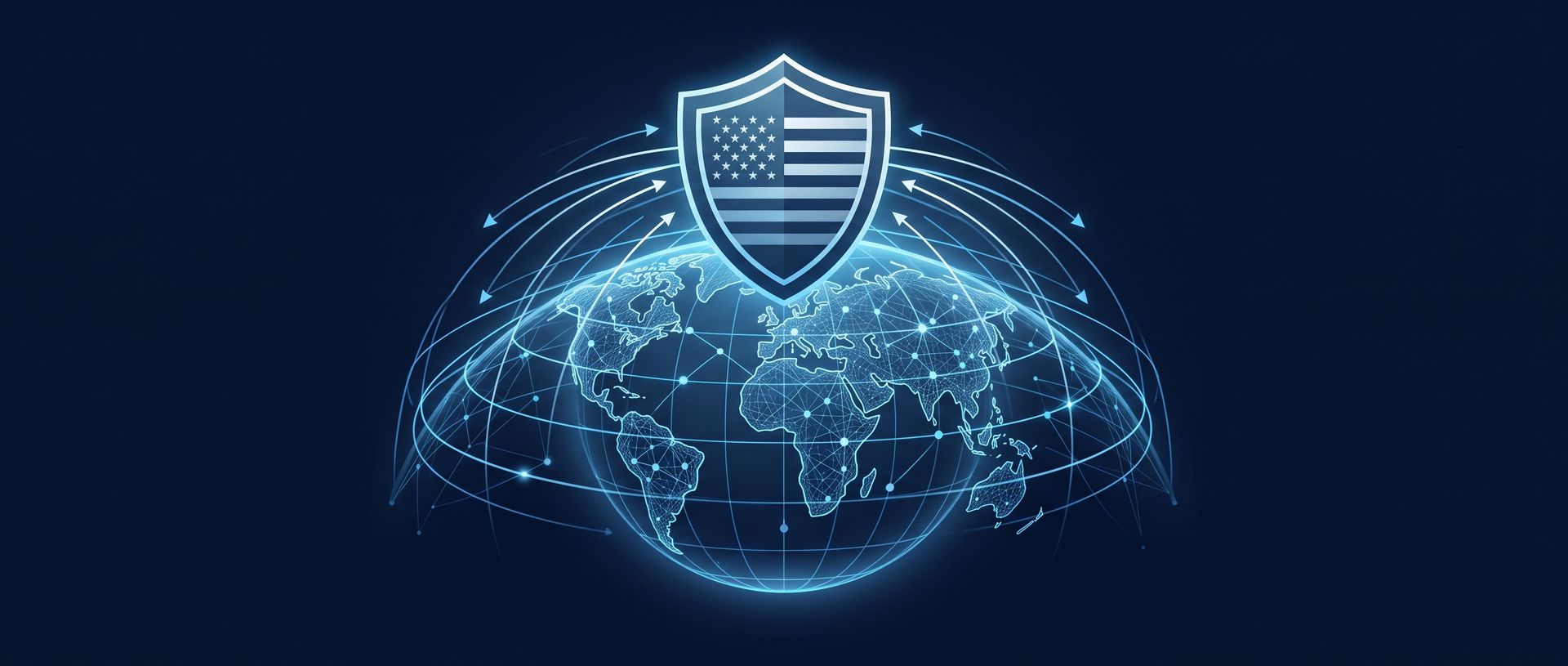
Mitigating the risks of the US CLOUD Act and global privacy mandates.
Enterprises face a direct conflict between the US CLOUD Act and international privacy laws like GDPR. The CLOUD Act allows US authorities to compel American providers to produce data regardless of its physical location. Okiff AI provides the technical barriers needed to prevent such unauthorized access.
Quebec Law 25: The Gold Standard of Privacy
Quebec’s Law 25 is uniquely strict, requiring that non-essential tracking technologies be "off by default". Organizations must document Privacy Impact Assessments (PIAs) for any AI project processing personal information. Non-compliance can result in penalties of up to $25 million.

EU AI Act and High-Risk Systems
The EU AI Act classifies AI used in sectors like HR, finance, and critical infrastructure as "High-Risk". Enforcement for high-risk system obligations begins on August 2, 2026. Okiff AI ensures all deployments meet the transparency requirements of Article 50, including mandatory labeling of AI-generated content.
Comparison of Regional Regulatory Penalties
Regulation | Jurisdiction | Max Penalty (Approx.) | Key Focus |
|---|---|---|---|
Law 25 | Quebec | $25,000,000 / 4% global turnover | PIAs, Consent, Profiling. |
EU AI Act | European Union | €35,000,000 / 7% global turnover | Risk tiers, Transparency. |
GDPR | European Union | €20,000,000 / 4% global turnover | Data residency, Subject rights. |
Intelligence Without Latency
Achieving sub-10ms inference for mission-critical operations.
In high-stakes environments, "black box" AI is not an option. Traditional Retrieval-Augmented Generation (RAG) is often slow and expensive, requiring a retrieval step for every query. Okiff AI utilizes Cache-Augmented Generation (CAG) to deliver rapid, consistent, and explainable decisions.
CAG vs. RAG: The Performance Revolution
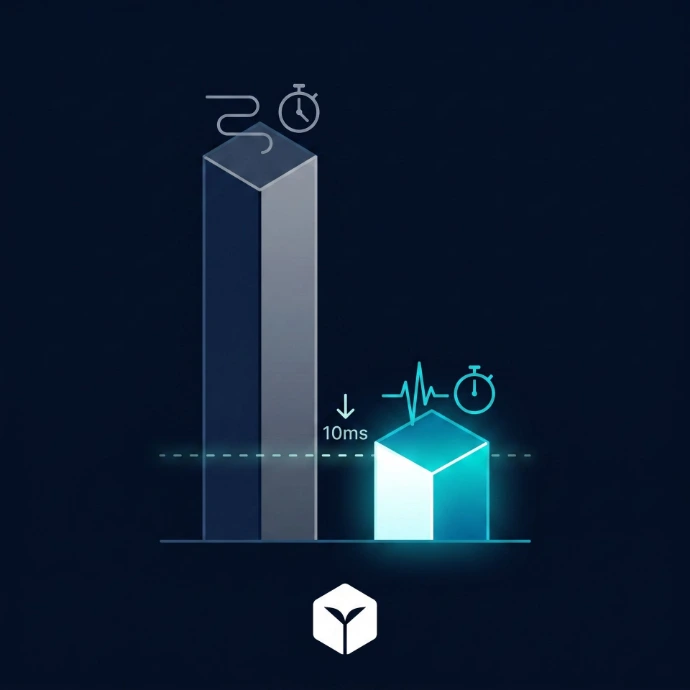
CAG pre-loads your entire knowledge base directly into the GPU’s KV-cache. This eliminates retrieval overhead, making it ideal for stable, knowledge-heavy domains. Unlike RAG, which can return irrelevant snippets, CAG allows the model to process all relevant information simultaneously.
Feature | RAG (Retrieval-Augmented) | CAG (Cache-Augmented) |
|---|---|---|
Typical Latency | 200–500 ms | < 10 ms |
Consistency | Can drift between sessions | High; based on stable cache. |
Complexity | Requires vector databases | Simplified; pre-computed. |
Ideal Use Case | Fast-moving news data | Stable enterprise knowledge. |
Auditability and "Knowledge as Code"
Every AI interaction is backed by Git-tracked history, providing an immutable audit trail [cite: 5]. We utilize the Open Knowledge Format (OKF) to transform static documents into traversable knowledge graphs [cite: 5, 28]. This ensures that our agents can cite specific sources, explaining the "why" behind every action.
Interoperability as a Core Principle
Future-proof your AI stack with OKF
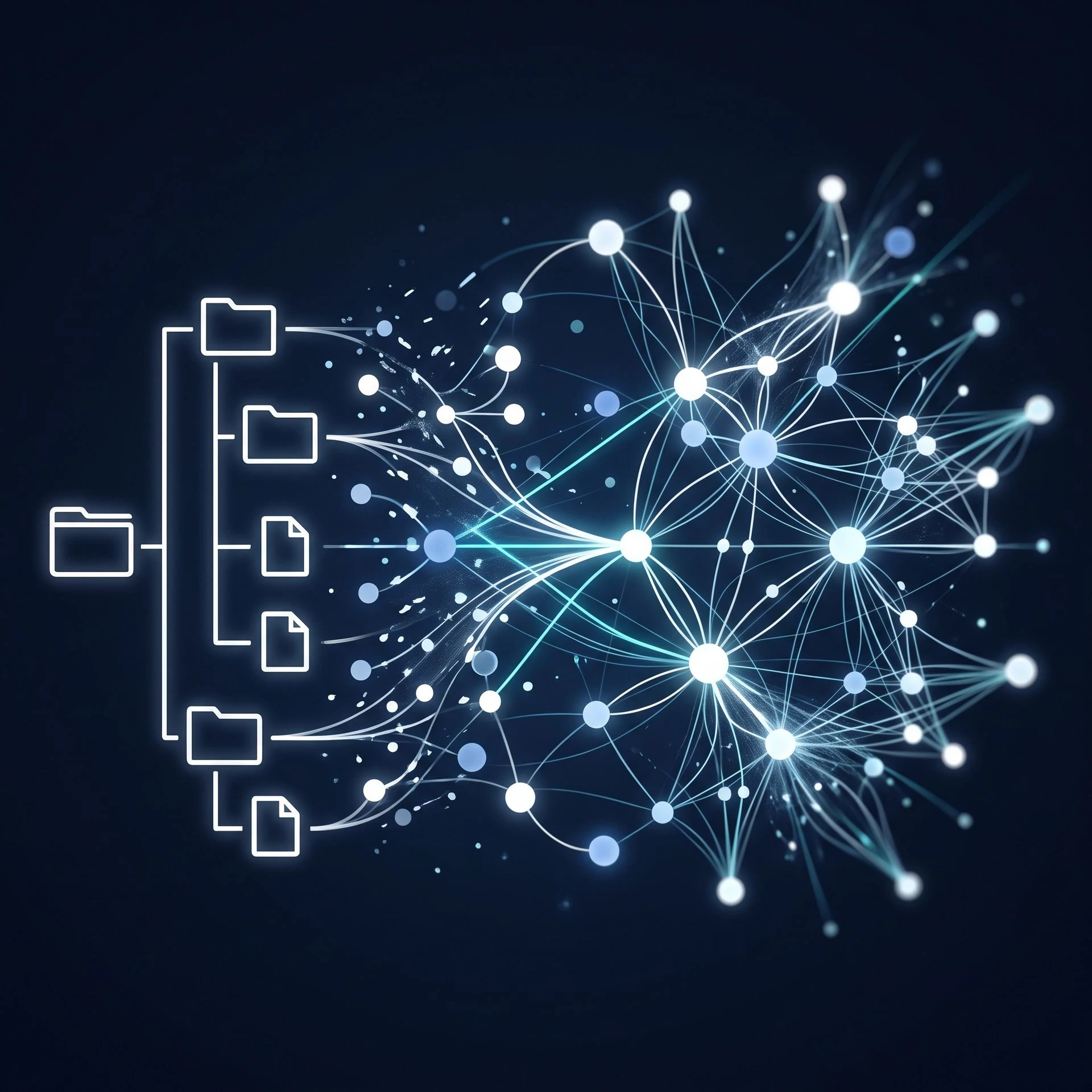
Traditional AI infrastructure traps data in proprietary SDKs and databases. The Open Knowledge Format (OKF) is a vendor-neutral specification that represents knowledge as Markdown files with YAML frontmatter. This ensures your knowledge base is modular, traceable, and interoperable.
Modular Architecture
Each concept is one file, preventing "tribal knowledge" loss.
Version Controlled
Knowledge lives in Git alongside the code it describes.
LLM Neutrality
Transition between different AI models without rebuilding your architecture.
Energy-Efficient Physical Intelligence
Reducing the environmental footprint of AI surveillance.
Video processing is traditionally energy-intensive and bandwidth-heavy. Okiff AI optimizes "energy per inference" by utilizing task-specific models rather than massive generative ones. By moving inference to the edge, we reduce bandwidth requirements by up to 90%.
Bandwidth Efficiency
Edge nodes transmit only state estimates and alerts, not raw sensor streams.
Real-Time Response
Edge inference can complete a pass in under one millisecond, enabling tighter control loops.
Lower TOPS/Watt
Our hardware-software co-optimization increases computation per unit of power.
Universal Design for a Digital World
Meeting WCAG Level AA and EAA standards.
In 2026, digital accessibility is a civil rights issue and a legal requirement. All services and activities of public and private sector organizations must be accessible to people with disabilities. We adhere to the "POUR" model: Perceivable, Operable, Understandable, and Robust.
Accessibility for AI Agents (AEO)
As we move toward an agentic economy, Accessibility for AI agents (AEO) becomes critical. Much like assistive technologies, AI agents encounter barriers in unstructured data. By using semantic HTML and OKF, we ensure that both human screen readers and AI browsing agents can navigate our systems seamlessly.
Frequently Asked Questions
What is Triple Federation in AI architecture?
Triple Federation is a security framework that unifies Identity, Data (via the Model Context Protocol), and Policy at the software kernel. It ensures that AI operations are inherently compliant, secure, and protected from extraterritorial data requests.
How does Okiff AI address the risks of the US CLOUD Act?
We utilize a decentralized "Continuum Edge AI" architecture that keeps data within your local jurisdiction. By deploying on-premises or via local HaaS nodes, we physically and logically prevent unauthorized data access authorized by the CLOUD Act.
Why is Cache-Augmented Generation (CAG) better than RAG for security?
CAG eliminates the latency and complexity of retrieval by pre-loading the knowledge base into the model's extended context. This provides sub-10ms response times and ensures that decisions are based on a complete, consistent knowledge set.