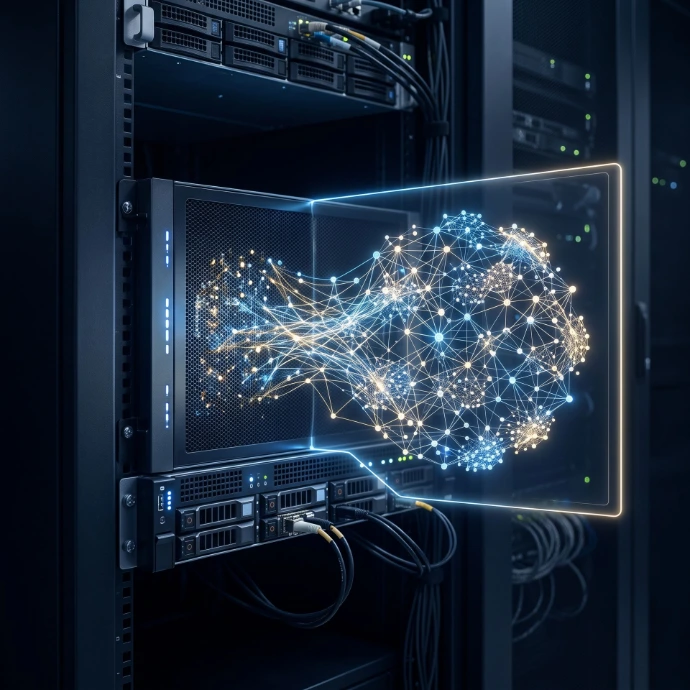
Industrial-grade AI speed delivered to your local rack
Centralized clouds pose systemic risks to data integrity and jurisdictional security in 2026. Okiff AI delivers high-performance, air-gapped local servers pre-configured for the Open Knowledge Format (OKF). This ensures your enterprise intelligence remains private, portable, and under permanent physical control.
Sub-10ms latency is only achievable when soft-layer optimizations meet high-bandwidth memory (HBM) infrastructure. Our HaaS model eliminates high CapEx barriers, providing pre-configured nodes that initialize automatically for immediate, high-speed reasoning. Reclaim your data speed and sovereignty today.
Eliminate Cloud Latency with Local Nodes
Sub-10ms response times for mission-critical intelligence
Traditional cloud-based AI is bottlenecked by slow external database lookups and variable network lag, often exceeding 2,000ms. In high-stakes environments like Industry 4.0 or aerospace, these delays are operational liabilities. Local servers bypass these bottlenecks through deterministic, hardware-level speeds.
By utilizing Cache-Augmented Generation (CAG), the architecture pre-loads the knowledge base into the GPU’s KV-cache. This eliminates the retrieval overhead associated with traditional RAG. The result is a 40x increase in generation speed, allowing thousands of concurrent streams with near-zero friction.
Performance Feature | Cloud-Based RAG | Local CAG (Okiff AI) |
|---|---|---|
Typical Latency | 200ms – 2,000ms+ | < 10ms (Deterministic) |
Knowledge State | Reactive (Search on-the-fly) | Proactive (Pre-loaded) |
System Complexity | High (Vector DBs/Rankers) | Low (Direct KV Management) |
Contextual Integrity | Risk of "Lost in the Middle" | Holistic Understanding |
Compute Overhead | High per-query search | One-time cache build |
Latency Targets by Enterprise Use Case
Use Case | Latency Target | Why Milliseconds Matter |
|---|---|---|
Fraud Detection | < 10ms | Transaction must be scored before authorization. |
Robotic Guidance | < 20ms | Precise vision loops require instant feedback. |
Voice AI Agents | < 200ms | Matches human tolerance for natural conversation. |
Dynamic Pricing | < 100ms | Real-time page rendering blocks on pricing. |
Defeating the US CLOUD Act with Localized Nodes
Physical barriers meet digital compliance in 2026
The US CLOUD Act allows foreign authorities to compel providers to produce data regardless of its physical location. For Canadian and European firms, this creates significant legal uncertainty. Storing data in Canada on foreign-owned clouds does not prevent access under foreign laws.
Okiff AI’s HaaS nodes provide natural immunity by ensuring data residency remains within domestic borders. By deploying localized, single-tenant infrastructure, organizations shrink their audit surface area. This simplifies the path to satisfying the world’s most stringent data mandates, including Quebec’s Law 25.
Local Residency
All data remains on-premise or on sovereign local nodes, satisfying Law 25 Section 17.
Audit-Ready Extraction
Compliance officers can export signed, tamper-proof audit trails instantly without external help tickets.
Zero-Trust Identity
Standardized eIDAS-compliant ledgers eliminate dependency on foreign cloud control planes.

Regulatory Compliance Comparison
Regulation | Max Penalty | Okiff Sovereign Solution |
|---|---|---|
Quebec Law 25 | $25M / 4% Turnover | Local logs & built-in PIAs |
EU AI Act | €35M / 7% Turnover | Traceable OKF version control |
GDPR | 4% Global Revenue | Localized sovereign hosting |
Knowledge as Code: Building Natively on OKF
Stop re-searching. Start cross-linking your intelligence
The primary bottleneck for AI agents is fragmented, unstructured text. Okiff AI leverages the Open Knowledge Format (OKF)—an open specification published by Google Cloud—to ensure your enterprise intelligence is represented natively as linked Markdown files with structured YAML frontmatter.
By adopting OKF at the storage layer, your organization transforms static documentation into a dynamic, version-controlled knowledge base. This "LLM-Wiki" paradigm allows agents to navigate your data deliberately while ensuring your intellectual property remains portable, traceable, and completely independent of any single AI vendor.

 Just Markdown
Content is human-readable, Git-backed, and indexable without proprietary SDKs.
 Just Files
Shipping knowledge is as simple as cloning a Git repository or mounting a filesystem.
 Just YAML
Structured metadata ensures your concepts are instantly queryable and filterable by AI agents.
OKF v0.1 Component | Functional Role | Strategic Advantage |
|---|---|---|
The Forest | Directory grouping | Logical context isolation |
The Tree | Individual Markdown file | Human & machine auditability |
Frontmatter | YAML Metadata | Rapid agent filtering |
Links | Directed Edges | Zero-lock-in navigation |
Industrial-Grade Hardware for Mission-Critical Speed
Elite software requires the world’s most powerful inference engines
Acquiring high-end GPU servers represents a significant financial barrier for many SMEs. Okiff AI neutralizes this "CapEx Wall" through Hardware-as-a-Service (HaaS). We convert equipment costs into predictable monthly operational expenses through external leasing pools.
Our HaaS model includes a "Technology Refresh" cycle every 3-4 years. This removes the fear of hardware obsolescence for technical buyers. Your infrastructure remains modern and performant without large upfront capital investments, delivered via "Zero-Touch" initialization.
Hardware Bill of Materials (BOM)
Hardware Category | Model Example | Technical Function | Capacity |
|---|---|---|---|
Sovereign Edge Entry | Jetson Orin Nano | Small office surveillance | 4 to 8 IP cameras |
Industrial Perimeter | Jetson Orin NX | Smart City / Manufacturing | 8 to 32 IP cameras |
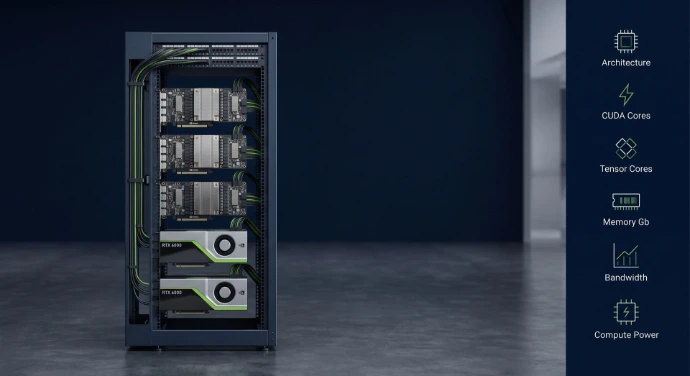
Core AI Server | Intel Xeon Pro | Enterprise RAG/CAG clusters | RTX 6000 (96GB VRAM) |
Command Center | AMD EPYC 9005 | Defense / Critical Infrastructure | 64+ HD cameras |
AI Workstation | Precision 7960 | R&D and local LLM fine-tuning | Dual RTX Ada GPUs |
Maximum Performance, Reduced Footprint
Infrastructure that evolves while you sleep
We maximize hardware efficiency through the "Circadian Cycle of Calculus". Computing power is reallocated based on temporal rhythms. During office hours, resources focus on real-time inference and ERP tasks; after hours, 100% of power shifts to intensive AI training.
This strategy maintains a GPU usage rate above 85%, accelerating your hardware ROI. It ensures that your enterprise's local intelligence layer is constantly evolving. Static assets are transformed into dynamic engines of continuous improvement without additional energy waste.
High Utilization
Compute power never sits idle, maximizing the value of every unit.
Telecommunications Savings
Edge processing results in an immediate reduction of 70% to 85% on telecom bills.
Task-Specific Models
Prioritizes energy efficiency through optimized, localized workloads.
Inclusive Intelligence: Accessible to Everyone
Leading the standard for web usability and cognitive accessibility
In 2026, accessibility is a legal and ethical requirement. Our landing pages and local interfaces are engineered to meet WCAG 2.2 Level AA standards. We ensure that every user, regardless of ability, can navigate our high-speed AI ecosystem without friction.
We have eliminated small tap targets and hidden focus states. Every interactive element—from buttons to form fields—is designed with a minimum size of 24x24 pixels. This ensures usability for mobile users and those with limited motor control.

Focus Visibility
High-contrast focus indicators ensure keyboard users never lose their place.

Cognitive Load Reduction
Forms utilize auto-fill and consistent help locations to reduce mental friction.
Semantic Structure
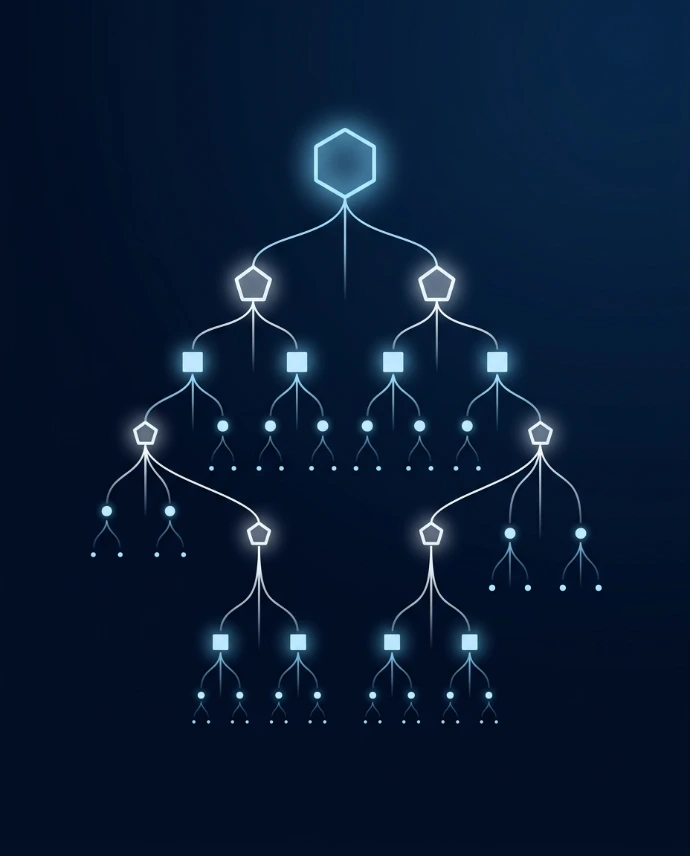
Proper H-tag hierarchy allows screen readers to interpret the "Accessibility Tree".
AEO Excellence
Knowledge is structured so AI browsing agents can navigate your systems as easily as humans.

Audit-Ready Hardware for Global Regulations
Meeting the Rigorous Standards of the EU AI Act
In 2026, AI transparency is mandatory for high-risk systems. Article 11 requires detailed technical documentation describing system design and development methods before market placement. Our HaaS model provides a transparent, traceable version control system built into every node.
Every AI response generated on your local server is audit-ready and fully compliant with Article 10 (Data Governance). We utilize the Open Knowledge Format (OKF) to ensure technical documentation is self-documenting and immutable. This prevents unauthorized access and ensures data integrity throughout the system's lifecycle.
EU AI Act Compliance Crosswalk
Article | Regulatory Requirement | Okiff Solution Implementation |
|---|---|---|
Article 10 | Data governance and lineage | Git-backed version history of OKF |
Article 11 | Technical documentation | Self-documenting Markdown & YAML |
Article 12 | Continuous event logging | Tamper-evident logs on WORM storage |
Article 15 | Cybersecurity resilience | Behavioral threat protection at inference |
Frequently Asked Questions
How does local hardware achieve sub-10ms latency compared to cloud RAG?
Traditional RAG retrieves data from external databases for every query, adding variable network and search lag. Cache-Augmented Generation (CAG) on local hardware pre-loads your entire knowledge base directly into the GPU’s KV-cache. This allows the model to "remember" context instantly during inference, achieving deterministic sub-10ms response times.
What are the primary benefits of Hardware-as-a-Service (HaaS) for AI?
HaaS eliminates the high capital expenditure (CapEx) required to purchase elite GPUs like NVIDIA H100s. It allows enterprises to deploy high-performance AI servers as a predictable monthly operational expense (OpEx). Additionally, HaaS includes a "Technology Refresh" cycle every 3-4 years, ensuring your infrastructure never becomes obsolete.
How does Okiff AI ensure compliance with Quebec's Law 25 and the EU AI Act?
We utilize a "local-first" sovereign architecture that keeps data within your physical perimeter. This satisfies the data residency mandates of Law 25 and mitigates risks from the US CLOUD Act. For the EU AI Act, we provide automated technical documentation and tamper-evident logging through our Git-tracked Open Knowledge Format (OKF).
What is the Open Knowledge Format (OKF) and why is it vendor-neutral?
OKF is a directory-based specification that represents knowledge as Markdown files with YAML frontmatter. Because it relies on standard file formats rather than proprietary databases or black-box SDKs, your intellectual property remains portable. You can move OKF bundles between different AI models and providers without expensive re-integration fees.
How does the "Circadian Cycle of Calculus" improve ROI?
The "Circadian Cycle" maximizes hardware efficiency by redirecting compute power based on temporal needs. During office hours, resources are dedicated to real-time inference and business operations. After hours, 100% of that power is shifted to AI training and knowledge compilation, maintaining infrastructure utilization rates above 85%.
Can localized AI servers handle air-gapped security requirements?
Yes. Our local servers are designed for "Zero-Touch" initialization and can be deployed in completely isolated environments. This is critical for sectors like aerospace, defense, and healthcare where physical and logical isolation from the public internet is a mandatory security requirement.